Circuit Breaker Sparking When Reset? We Fix It Fast

A circuit breaker that sparks when reset should never be ignored. While a tripped circuit breaker can be caused by something as simple as a faulty breaker or an overloaded circuit, a flash, popping sound, or visible sparking often points to a more serious electrical problem that requires immediate attention. At King Electrical Services, we've been serving homeowners and businesses throughout Greensboro, North Carolina and the entire Triad since 2008. As licensed electricians, we frequently respond to calls involving tripped breakers, popping sounds, electrical sparking, burning odors, power outages, and damaged electrical panels. In many cases, what appears to be a simple breaker problem is actually a warning sign of a loose connection, damaged conductors, failing equipment, or another potentially hazardous condition.

In this article, we'll explain the most common reasons a circuit breaker may spark when reset, what homeowners should do when it happens, and when it's time to contact a licensed electrician.

If you're experiencing a sparking breaker, do not wait, contact us now to speak directly with an on-call licensed electrician.
Call us: (336) 362-9394

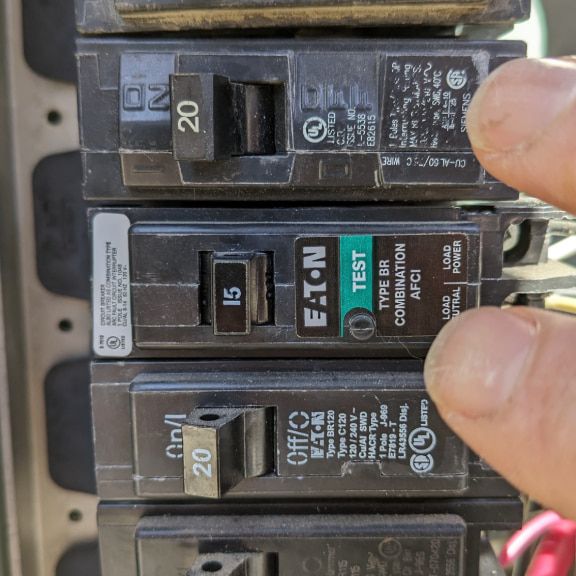
AFCI circuit breaker tripped inside an electrical panel

Why Does a Circuit Breaker Spark When Reset?

A circuit breaker's job is to protect your home's electrical system from overheating, equipment damage, and electrical fires. When a breaker trips, it's usually doing exactly what it was designed to do: interrupting power before a dangerous condition can damage wiring or electrical equipment.

As shown in the image, modern AFCI (Arc Fault Circuit Interrupter) breakers provide an additional layer of protection by detecting dangerous arcing conditions, helping reduce one of the leading causes of residential electrical fires. While some breakers trip because of simple overloads, a breaker that sparks when reset often points to a more serious issue such as a short circuit, faulty connected equipment, electrical panel or equipment damage, loose electrical connections, water intrusion within the electrical system, or a failed circuit breaker.

A breaker that sparks, pops, flashes, or emits a burning odor should never be repeatedly reset without first identifying the cause. Below, we'll take a closer look at the most common reasons this occurs and explain what homeowners should watch for.

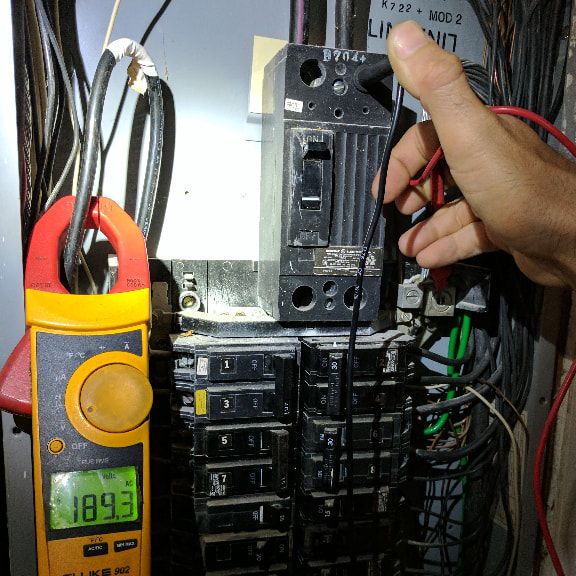
Electrician testing voltage inside an electrical panel

Short Circuits: The Most Common Cause of a Sparking Breaker

A short circuit occurs when electrical current takes an unintended path, most commonly when a hot conductor comes into contact with a neutral conductor or a grounded surface. Because electricity suddenly encounters very little resistance, current flow increases dramatically and the breaker trips almost instantly to prevent overheating, equipment damage, or an electrical fire.

Short circuits can be caused by damaged wiring, loose connections, improperly installed electrical devices, rodent damage, or fasteners that accidentally penetrate wiring hidden within walls. When a short circuit is present, the breaker is responding to a dangerous condition and is performing exactly as designed.

If a breaker immediately trips, sparks, or flashes when reset, the underlying fault should be identified before power is restored. Repeated reset attempts can create additional damage and may increase the risk of overheating, arcing, or electrical fire.

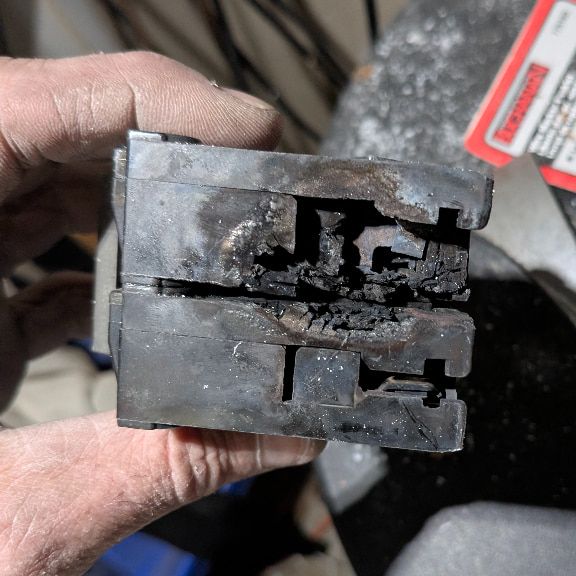
Burned double-pole circuit breaker with visible damage

Connected Equipment Can Cause Breakers to Trip and Spark

Not every breaker problem originates within the home's wiring. Appliances, HVAC equipment, well pumps, disposals, water heaters, dehumidifiers, and other connected electrical devices can develop internal faults that cause a breaker to trip immediately when power is applied.

When connected equipment experiences a short circuit, ground fault, or internal component failure, the breaker responds by interrupting power to prevent further damage. In some cases, a breaker may trip normally the first time, but spark or flash during subsequent reset attempts if the fault remains present.

If a specific appliance or piece of equipment was operating when the breaker tripped, disconnecting that equipment before attempting a reset may help identify the source of the problem. However, if the breaker continues to trip, sparks when reset, or shows signs of overheating, the circuit should remain off until the cause can be properly diagnosed and repaired.

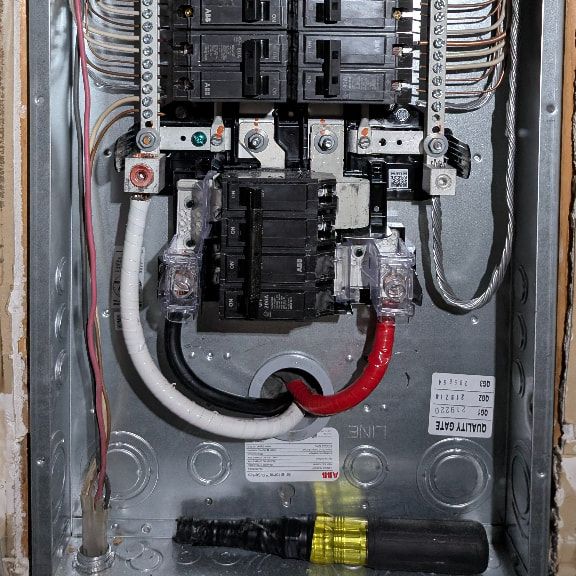
New electrical panel installation in progress

Electrical Panel or Equipment Damage Can Create Dangerous Conditions

Damage inside an electrical panel or connected equipment can cause breakers to trip, spark, or fail to reset properly. Burned connections, loose terminals, overheating, and damaged bus bars all disrupt safe electrical flow and can create serious fault conditions.

In many cases, this type of damage develops over time as heat builds at loose connections or deteriorating components. Homeowners may notice flickering lights, burning odors, or intermittent power issues before more serious symptoms appear. This is why preventative maintenance, such as routine electrical panel inspections are strongly recommended to catch developing issues before they become hazardous.

As shown in the image, a professional electrical panel upgrade or replacement involves careful installation and organization of panel components and wiring to ensure the system is safe, secure, and operating correctly.

Frequently Asked Questions About Sparking Circuit Breakers

  1. Can I keep resetting a circuit breaker if it sparks? No. A breaker that sparks, pops, smells burnt, or immediately trips again should not be repeatedly reset. These symptoms often indicate an electrical fault that requires diagnosis and repair.
  2. How long should a circuit breaker last? Most circuit breakers can last several decades under normal conditions. However, age, heat, moisture, electrical faults, and repeated tripping can shorten their lifespan.
  3. Should I replace older breakers with AFCI breakers? In many cases, yes. AFCI (Arc Fault Circuit Interrupter) breakers provide additional protection against dangerous arcing conditions and are recommended whenever compatible with the electrical system.

  4. How often should an electrical panel be inspected? We generally recommend a professional electrical panel inspection every three years for most residential properties, or sooner if you notice tripping breakers, flickering lights, burning odors, or other electrical concerns.

  5. Can a bad appliance cause a breaker to spark when reset? Yes. Faulty appliances, tools, HVAC equipment, and other connected loads can create fault conditions that cause a breaker to trip and spark when power is restored.

Protecting Electrical Systems Throughout the Triad

Routine electrical panel inspections can help identify loose connections, damaged components, corrosion, and other developing electrical issues before they become safety hazards. For most homes, we recommend a professional panel inspection every three years, while commercial facilities and higher-use electrical systems may benefit from more frequent inspections.

Where compatible with the electrical system, we also recommend upgrading to AFCI (Arc Fault Circuit Interrupter) breakers. As discussed earlier, AFCI protection helps detect dangerous arcing conditions and provides an additional layer of protection against electrical fires.

If your circuit breaker is sparking when reset, repeatedly tripping, producing burning odors, or showing other signs of electrical trouble, the safest course of action is a professional evaluation before attempting to restore power. At King Electrical Services, we provide electrical troubleshooting, panel inspections, and repairs throughout the Triad, including Greensboro, High Point, and Winston-Salem.

Contact us today to speak directly with a licensed electrician.